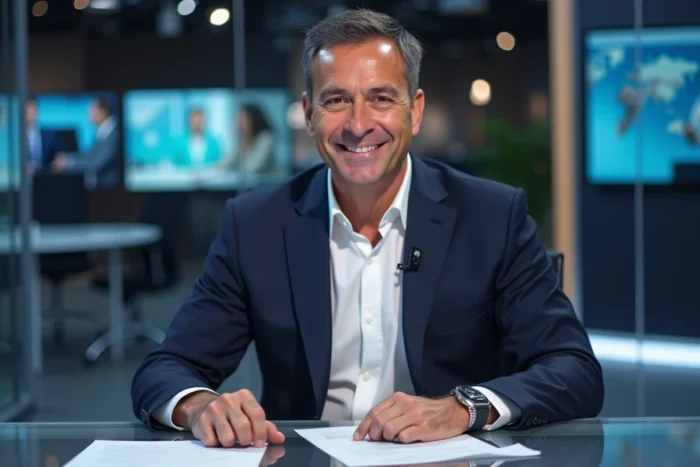
Some presenter contracts reach several hundred thousand euros per month, while others remain well below the 10,000 euro mark. The disparities in remuneration are reinforced by strict confidentiality clauses and exceptional bonuses linked to audience ratings. In 2025, despite the pressure from networks to cut costs, a few iconic figures continue to negotiate record salaries. The exact amounts vary depending on fame, the type of program, and the network, making it always difficult to establish a ranking of the highest earners.
Television presenter salaries in France: overview and trends in 2025
Preconceived notions abound around the presenter salary in France, fueled by the striking disparities in the sector. For the vast majority of TV presenters in France, the reality lies between 4,000 and 20,000 euros gross per month. Yet, a handful of figures, propelled by their fame and sometimes exceptional contracts, regularly surpass the 50,000 euro ceiling. The careers of Jean-Luc Reichmann, Nikos Aliagas, or Cyril Hanouna illustrate how this world remains the domain of a small, well-identified circle.
Behind these figures, the structure of the audiovisual landscape leaves its mark. At France Télévisions, salaries display a form of transparency and ceilings, but bonuses based on duration or audience cleverly push these limits. Who has forgotten the golden contracts awarded to Jean-Pierre Pernaut or Claire Chazal after years of loyalty on screen? On the private side, each star negotiates their status and income, often linked to their ability to retain a loyal audience year after year.
For those starting their careers, entry into a major national channel typically ranges between 3,000 and 7,000 euros gross per month. Progressing to higher amounts requires audience success, professional recognition, and, in some cases, a bit of luck to secure collaborations or special fees. Calculations sometimes include royalties or one-off income from production, which can boost a paycheck.
For factual and precise data on these salary levels, the salary of a TV presenter on Harakiwi provides an unvarnished overview of these disparities, demonstrating the gap between a few headliners and the majority of the sector.
How much do TV stars really earn, from Cyril Hanouna to new faces?
It’s impossible to ignore the diversity of incomes in the arena of TV presenters. Among the must-haves, Cyril Hanouna accumulates an estimated monthly salary between 40,000 and 50,000 euros gross, excluding bonuses and additional amounts. Jean-Luc Reichmann, supported by the incredible longevity of his daily game show, approaches 30,000 euros. Nikos Aliagas, with multiple shows, maintains a range of 35,000 to 45,000 euros depending on the season and program combinations.
To stay concrete, the overwhelming majority of well-established presenters, like Benjamin Castaldi, Denis Brogniart, or Laurence Ferrari, rarely surpass the 20,000 euro mark per month, except for exceptional opportunities or specific contracts. Former news anchors like Jean-Pierre Pernaut or Claire Chazal once enjoyed salaries significantly exceeding 30,000 euros, reflecting a time when television unapologetically concentrated its investments on a few figures.
Newcomers experience a very different reality: an entry salary of 3,000 or 7,000 euros, certainly enviable, but far removed from the fortune accumulated by the more established profiles. The scale of income sources remains broad: audience bonuses, rights related to creation, or special appearances. In short, the ascent depends on visibility, fame, and years of continuous presence on screen.

What key figures reveal about TV presenter remuneration and why they fascinate so much
French television showcases a pay gap that is both striking and enduring. Leading figures like Jean-Luc Reichmann and Nikos Aliagas accumulate amounts that far exceed most audiovisual-related professions, proving the unique status of television as a national institution.
However, the salary, no matter how spectacular, does not tell the whole story. For the most established, fortune and stability also depend on royalties, advertising contracts, participation in ancillary shows, or the sale of show concepts abroad. The perception of a iconic show presenter owes much to public loyalty, reflecting a rare chemistry between closeness and visibility. The major networks know that a presenter embodying the brand is worth a few extra zeros on the paycheck.
Behind the desk of the news broadcast or on an entertainment set, remuneration rewards both the ability to unite and the capacity to withstand the test of time. Jean-Pierre Pernaut and Claire Chazal long symbolized this loyalty mechanism, particularly at France Télévisions, where securing a permanent contract is almost an achievement.
It is clear that salaries on the small screen continue to fuel collective curiosity. Behind the spotlight, they crystallize the value society places on its public figures and the thin line between well-earned fame and sometimes spectacular fortune. The desire to unravel this mystery remains strong: as long as television inspires dreams, there will be debates and fantasies about the paychecks of stars, and probably, a few figures that will leave one dizzy.