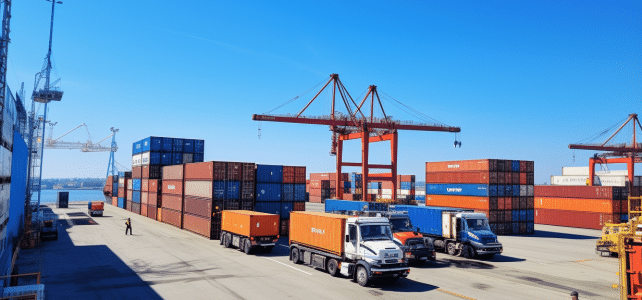
Navigating the maze of customs procedures often presents a challenge, especially at a time when international trade is experiencing unprecedented expansion. Between changing regulations, various classifications of goods, and bilateral trade agreements, businesses as well as individuals can quickly feel overwhelmed. This regulatory labyrinth requires a sharp understanding of the current laws, meticulous tracking of documentation, and the ability to anticipate costs and timelines. For economic players, mastering these procedures is essential to avoid costly delays and potential penalties.
Demystifying Customs Procedures: From Theory to Practice
The customs agency, often perceived as an impenetrable barrier, is actually the central pivot of international trade. Its mission to protect national security and the economy is carried out through rigorous control of goods and people crossing borders. Every package, every product entering or leaving the territory is subject to constant vigilance, guaranteed by customs regulations that vary from one nation to another. This is where the first part of the customs chessboard plays out: knowing and understanding the applicable customs duties and taxes is a fundamental step for any business wishing to successfully navigate this complex world.
Let’s address the customs formalities. These procedures, far from being just a set of administrative steps, represent a meticulous inspection process of goods and documents. They differ by country and require particular attention to detail to avoid pitfalls. The ‘Mercury customs’, a metaphor for the speed and fluidity necessary in the transit of goods, is not a myth. It materializes when international trade players anticipate and comply with the requirements of each national customs authority. The customs clearance process, far from being a mere formality, is the key to successful integration into the target market.
The relationships between the various actors are of paramount importance. Customs controls goods, but also customs declarations submitted by travelers and businesses. The latter must maneuver skillfully to avoid delays and penalties. The customs declaration is not just another form; it reflects a company’s strategy to ensure compliance with its commercial activities. Navigating customs procedures requires a precise mapping of obligations and mastery of interactions among all links in the supply chain.

Strategies for Effective Management of Customs Formalities
The meticulous preparation of necessary documents is the foundation for a smooth passage through customs barriers. Passport, visa, commercial invoices, packing lists, certificates of origin—these documents are not mere formalities but the keys that open the door to the customs clearance process. Rigorous management of these documents not only facilitates transactions but also helps avoid unexpected costs related to the payment of duties and taxes. The transparency of the information provided and the compliance of the documents presented are accelerators for customs passage, thereby reducing delays and the risk of disputes.
The customs declaration occupies a central place in the structure of international exchanges. This essential document, which must be filled out upon arrival in the importing country, allows customs agents to scrutinize imported goods. Compliance with restrictions and the calculation of customs duties depend on it. It is not merely a form but a strategic tool for businesses, which must use it wisely to optimize the management of duties and taxes. A careful reading of the declaration lines and an accurate assessment of the products concerned are therefore imperative to ensure the accuracy of information and the speed of customs clearance.
The success of a customs operation relies on the ability to anticipate and integrate the various customs duties and taxes applicable to imported or exported products. A thorough understanding of customs tariffs and free trade agreements can offer significant advantages to businesses. They must equip themselves with monitoring and analysis mechanisms to seize opportunities for tax reduction or exemption. Navigating the maze of customs procedures requires flawless mastery of current regulations and constant adaptation to legislative and economic developments.