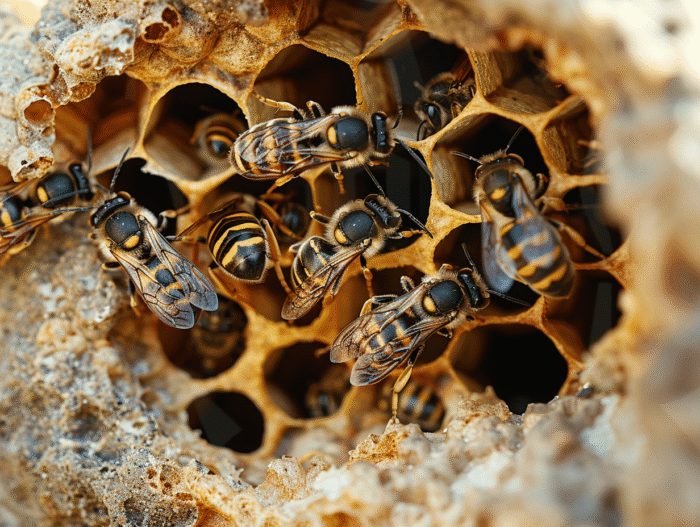
Across the world, hornets evoke both fascination and fear. Their life cycle, often misunderstood, is a complex natural ballet. It all begins in spring when the queen, the sole survivor of the colony, emerges from her winter slumber. She then embarks on the construction of a new nest, laying eggs that will hatch into workers. These workers will take over the expansion of the nest and the raising of new generations. The peak of this social structure is reached at the end of summer, before autumn signals the inevitable decline of the colony and the abandonment of the nest, making way for a new queen to perpetuate the cycle.
The life cycle of the hornet: from birth to the founding of a new nest
In the early days of spring, an Asian hornet, Vespa velutina, emerges from winter diapause. The foundation of a new nest begins with a fertilized queen from the previous year. She searches for a sheltered spot and starts alone the construction time of a hornet nest. Using chewed wood fibers to create a material similar to papier-mâché, the queen constructs the first cells where she will lay her eggs.
These eggs will hatch into larvae that, once developed, will metamorphose into workers. They will take over the expansion of the nest and the gathering of food, primarily composed of nectar and ripe fruits. Their lifespan is estimated at 30 days, during which they dedicate themselves entirely to the survival of the colony.
At the twilight of summer, the nest reaches its peak, housing the queen, the workers, and now also the males and future reproductive females. The latter are destined to survive the winter and perpetuate the species. The males, on the other hand, have the sole role of reproduction and die shortly after fulfilling their function.
During this period, the Asian hornet, a feared predator of bees, intensifies its attacks on hives, raising growing concerns about its impact on biodiversity and beekeeping. Despite its role as a predator, the Asian hornet is part of an ecological chain whose imbalances can have unpredictable repercussions. These creatures, often unloved, prove to be key players in our environment.
The end of a hornet nest’s life: abandonment and ecological impacts
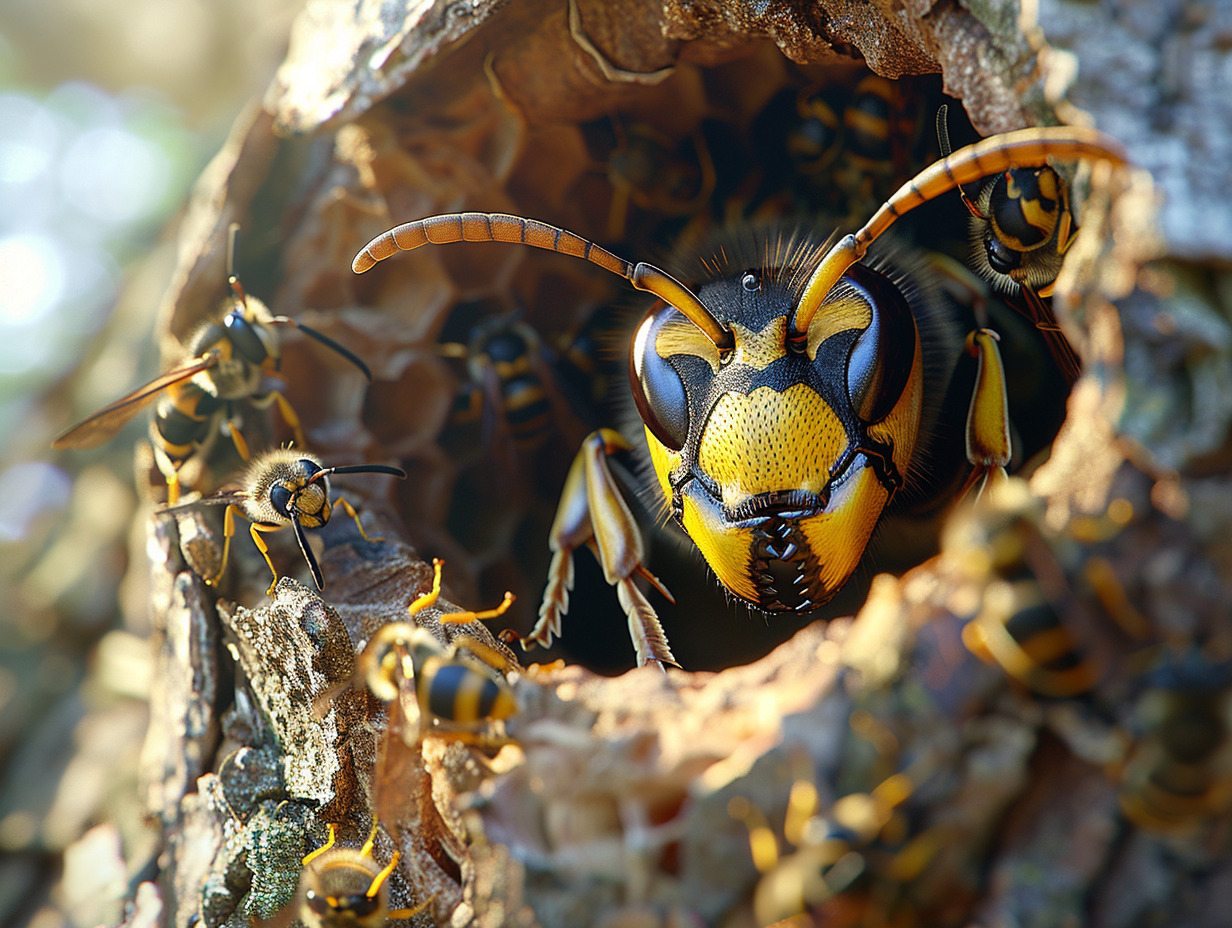
With the arrival of the first frosts, the life cycle of an Asian hornet nest comes to an end. The imposing structures, which can reach a meter in height and house up to 1,700 individuals, are gradually abandoned. The queen, having reached the end of her approximately one-year existence, leaves behind a now useless nest made of chewed cellulose fibers.
The last survivors, the reproductive females, leave the nest to find refuge and enter diapause, ready to initiate a new cycle in the following spring. Nature reclaims its rights, slowly decomposing the abandoned nest. This natural process, however, conceals a darker reality: the predation of bees by the Asian hornet, a threat that weighs on ecological balance.
Bees, essential for pollination and biodiversity, are severely impacted by the presence of the Asian hornet. Their role as a predator is particularly evident during attacks on hives, significantly affecting honey production and the survival of bee colonies. The estimated annual consumption of 70 kg of insects per nest highlights the significant ecological impact of these predators.
Humans, for their part, harbor a fear of these hornets while being directly affected by the reduction in honey production. The gradual disappearance of nests in winter offers a temporary respite, but the threat returns with the renewal of the cycle. Be aware of the multiple facets of this complex dynamic, where fear coexists with admiration for this mechanism of life and death orchestrated by the Asian hornet.