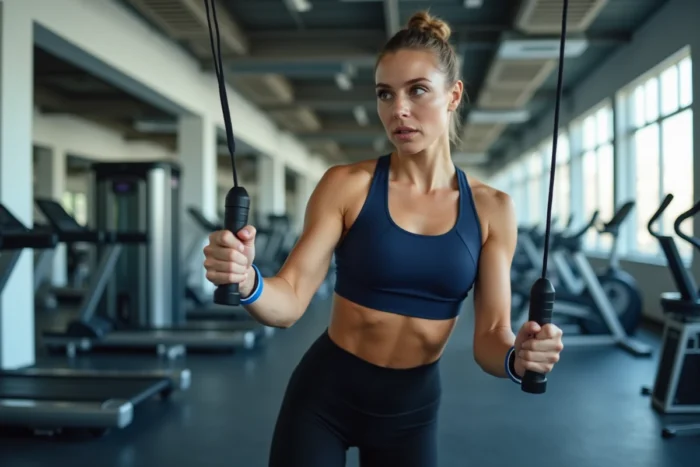
Abdominal fat cannot be treated locally. Searching for which Basic Fit machine to lose belly fat often leads to recommendations centered around the crunch machine or the ab coaster, while these devices do not generate the energy deficit necessary for reducing visceral fat mass. We recommend thinking in terms of overall caloric expenditure before considering targeted strengthening.
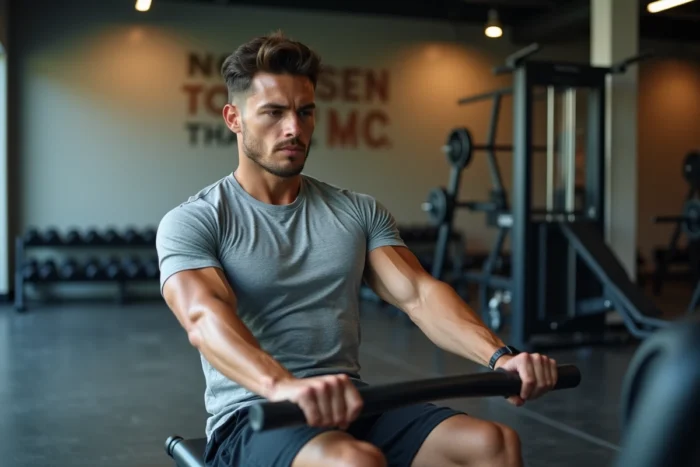
Basic Fit Rowing Machine: The Underrated Cardio Machine for the Belly
The rowing machine checks two boxes simultaneously: intense cardio work and dynamic core stabilization. Each pull engages the abdominal belt, lats, quadriceps, and hamstrings. This engagement of large muscle groups in a chain creates an energy expenditure far greater than that of an isolation exercise.
In practice, the rowing machine available in the standard cardio area of the gym allows you to maintain a heart rate in the lipid oxidation zone while imposing constant stabilization on the core. It is this combination that distinguishes it from the bike or treadmill, where the abdominal belt remains relatively passive.
We observe that the content circulating on social media about Basic Fit machines for the belly largely ignores the rowing machine in favor of abdominal strength training devices. To delve deeper into the subject, check out this guide on which Basic Fit machine to lose belly fat. The rowing machine deserves the top spot in a program focused on abdominal fat loss.
Treadmill and Elliptical: How to Use Them to Target Abdominal Fat
The treadmill remains the most accessible cardio equipment. To maximize its effect on visceral fat, the interval approach (alternating between fast phases and active recovery) significantly outperforms steady-state cardio. Interval sessions increase post-exercise expenditure significantly compared to moderate continuous effort.
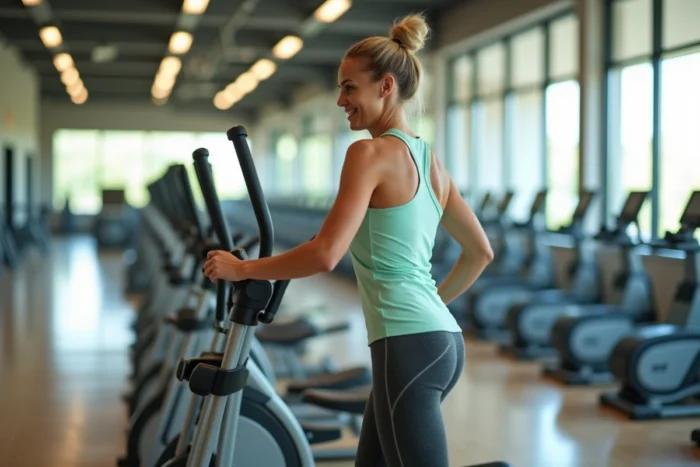
The elliptical engages the upper limbs in addition to the legs, which increases the expenditure per session. It also has the advantage of limiting joint impacts, a relevant criterion for overweight individuals starting a belly loss program.
Concrete Settings for These Two Machines
- On the treadmill, prioritize high-intensity blocks (sprints or steep inclines) of 30 seconds, followed by 60 to 90 seconds of active walking, for a total duration of 20 to 25 minutes
- On the elliptical, set a resistance sufficient for the arms to actually pull (not just the legs), and aim for sessions of 25 to 35 minutes with cadence peaks every 3 to 4 minutes
- Alternate between the two machines from one session to the next to vary muscle engagement and avoid metabolic adaptation
Crunch Machine and Ab Coaster at Basic Fit: Strengthening, Not Slimming
Ab machines do not help lose belly fat. The crunch machine and the ab coaster strengthen the rectus abdominis and obliques, improving the tone of the abdominal belt. However, their energy cost per session is low: the muscle volume engaged is too small to create a noticeable caloric deficit.
Their utility lies in being complementary, not a central pillar. We integrate them at the end of the session, after the cardio block, to work on the quality of abdominal contractions. Two to three sets of 12 to 15 repetitions are sufficient. Beyond that, the benefit-time ratio collapses.
When the Crunch Machine Becomes Counterproductive
A common trap: compensating for a lack of abdominal strength by pulling with the hip flexors. On the crunch machine, if the load is too heavy, the psoas takes over, and the lumbar spine undergoes unnecessary strain. Reducing the load to truly isolate the abdominals yields better results on the belt than forcing while compensating.
Frequency and Recovery: What Makes the Difference in Visceral Fat
Regularity takes precedence over occasional intensity. Three to four weekly sessions combining cardio (rowing, treadmill, or elliptical) and core strengthening provide a realistic framework for observing visible results on waist circumference within a few weeks.
Recovery conditions the ability to maintain this rhythm. Following intense cardio sessions without rest days leads to accumulated fatigue that causes missed workouts, reducing adherence to the program. A rest day between two intense sessions is not wasted time; it is invested time.
NEAT (non-exercise activity thermogenesis, such as daily walking or standing) also plays a role often overlooked in discussions about gym machines. Increasing your activity outside the gym effectively complements the work done in the gym to maintain a sufficient energy deficit without exhausting the body.
A belly loss program at Basic Fit therefore relies on a simple hierarchy: the rowing machine or another multi-joint cardio device as a priority, ab machines as targeted complements, and a sustainable frequency over time. The choice of machine matters less than the consistency with which it is used.