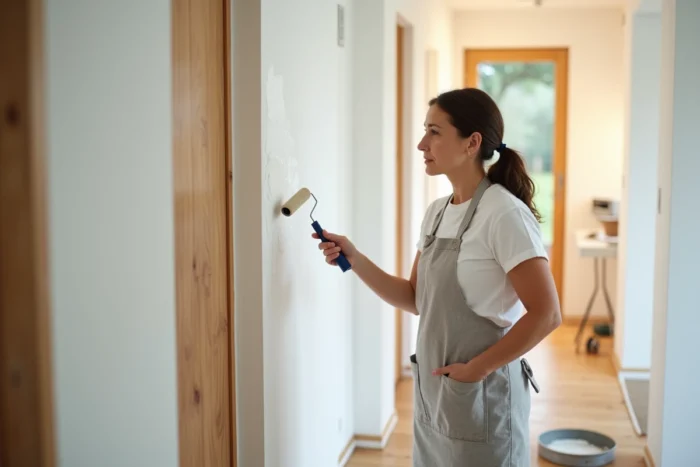
The majority of French households have at least one source of avoidable energy loss, according to industry data. Improving your home on a daily basis, however, does not always require heavy renovations or a significant budget. The key often lies in targeted adjustments, repeated over time, that address both indoor air quality and the practical organization of living spaces.
Indoor air quality: the invisible lever of a healthy home
Content on home improvement largely focuses on decoration and organization. Indoor air quality, on the other hand, remains a less addressed angle even though it directly affects the comfort and health of occupants.
Three parameters deserve regular attention: ventilation, humidity levels, and the presence of household pollutants (cleaning products, new furniture, scented candles). Ventilating each room for ten minutes a day remains the most effective action, even in winter. A clogged ventilation system or obstructed vents negates some of this benefit.
Monitoring humidity in the bathroom and kitchen limits the development of mold. A simple hygrometer, available for a few euros, allows you to check that the level remains within an acceptable range. When it comes to cleaning, opting for products based on white vinegar or black soap reduces the chemical load in the ambient air without sacrificing effectiveness.
Additional resources on home maintenance and practical tips are regularly compiled on the RapidActu home site, with approaches tailored to different housing configurations.
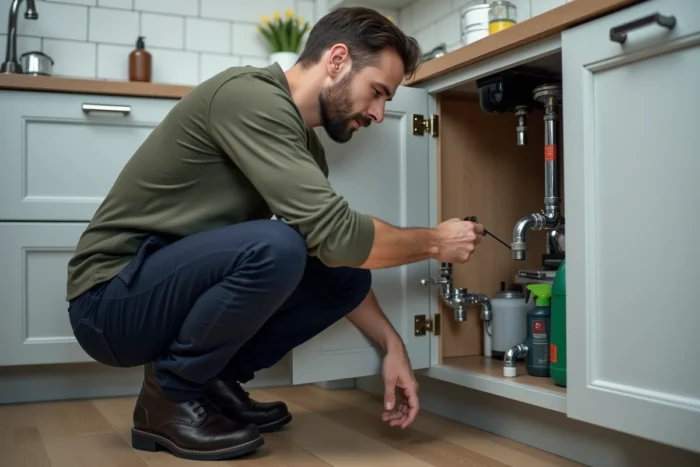
Organization and space optimization: think in zones rather than by room
The generic advice “declutter your space” is not enough. What works is to separate storage by usage zones and routines rather than treating each room as a homogeneous block.
In a kitchen, the preparation area, cooking area, and cleaning area have different storage needs. Storing items as close as possible to their point of use eliminates unnecessary movements and speeds up daily tasks.
How to divide your spaces into functional zones
- Identify the three or four main activities of each room (cooking, eating, working, relaxing) and group the corresponding items within a limited perimeter
- Use vertical storage (wall shelves, door hooks) in small spaces to free up floor space without buying additional furniture
- Reevaluate the contents of closets once or twice a year: an item not used for over a year occupies space that could be used for daily needs
This zoning logic adapts well to both a studio and a family home. The size of the home changes the solutions, not the method.
Cleaning and maintenance: the logic of micro-routines
Sustainable improvement of an interior relies less on a big monthly clean and more on small, repeated adjustments. Field feedback converges on this point: breaking household tasks into short sessions spread throughout the week reduces mental load and keeps the home in a stable condition.
Some concrete principles work better than endless lists of tips:
- Assign a cleaning task to each day (Monday: bathroom, Tuesday: kitchen, Wednesday: floors) rather than concentrating everything on the weekend
- Clean a surface immediately after use (countertop, stovetop) to avoid the accumulation of stubborn dirt
- Keep a minimal cleaning kit in each high-use room (kitchen, bathroom) to eliminate friction related to moving equipment
A home maintained by micro-routines takes less time than a catch-up clean. Regularity replaces intensity.
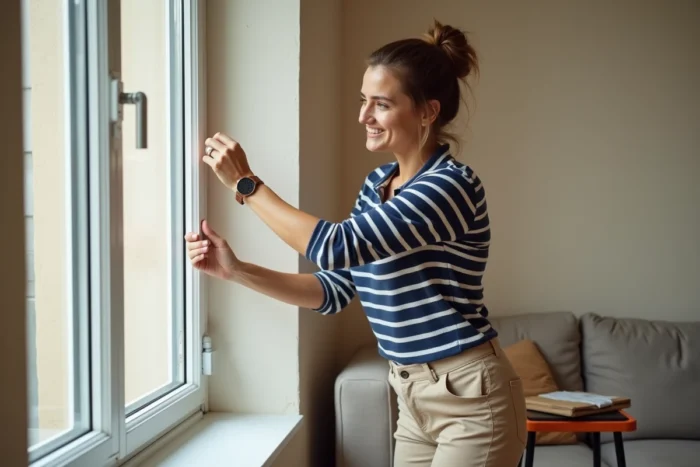
Small improvement tasks: what really changes daily life
When budget or time is lacking, the temptation is to postpone any intervention. However, some low-cost improvements have a disproportionate impact on daily comfort.
Replacing blackened silicone seals in the bathroom takes less than an hour and transforms the look of the room. Installing accent lighting under a kitchen cabinet or in a dark hallway changes the perception of space without touching the main electrical installation. These micro-tasks target specific irritants rather than a complete renovation.
Prioritize based on real impact
Before starting a project, evaluating two criteria is sufficient: the frequency of use of the concerned area and the level of daily annoyance. A dripping faucet in the kitchen (used several times a day) deserves more attention than faded paint in a guest room. The order of priority depends on usage, not aesthetics.
The available data does not allow for a standard budget for these interventions, as situations vary from one home to another. However, the principle remains constant: it is better to address a concrete irritant each month than to plan a complete renovation without ever starting it.
Improving your home on a daily basis relies on an accumulation of modest actions, focused on air quality, organization, and regular maintenance. Sustainable changes rarely come from a single large project, but from repeated attention to the details that make up life in a home.